What Is Folk Art? A Guide to Everyday Creativity, Culture, and Context
Folk art is often easy to recognize and surprisingly difficult to define. The most useful way into the subject is not to search for one universal style, but to ask how art grows from everyday life, shared knowledge, personal invention, and place.
Start with a wider definition
Folk art is connected to ways of living and learning.
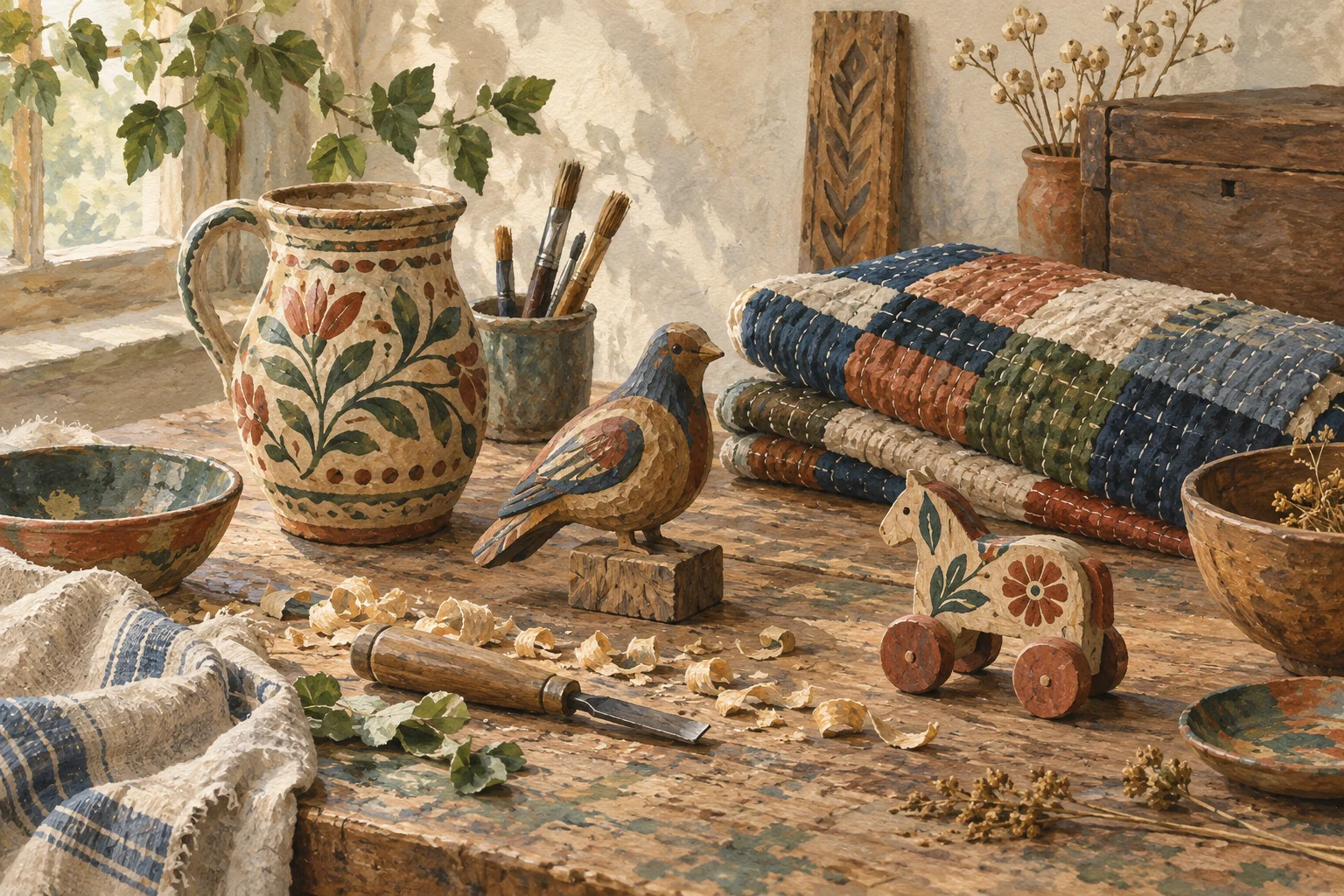
The term can describe painting, carving, quilts, ceramics, textiles, signs, toys, decorated tools, devotional objects, and many other forms. Some works are practical, some ceremonial, and some are made simply to be seen. What often connects them is not a single appearance, but a relationship to lived experience, community knowledge, or artistic learning outside formal academies.
Even that definition needs care. “Folk art” is a category created and used by collectors, museums, scholars, markets, and communities. It can help people notice work that older art histories ignored. It can also flatten very different artists and cultures into one decorative style. A good introduction therefore treats the label as a beginning—a reason to ask more precise questions—not as the final answer.
How the category developed
The making came first. The museum label came later.
People made expressive objects for homes, work, worship, memory, and celebration long before institutions grouped them under the name folk art. In the United States, the modern field took shape around the beginning of the twentieth century as collectors, artists, critics, dealers, and curators searched for forms they believed expressed a distinctly American identity.
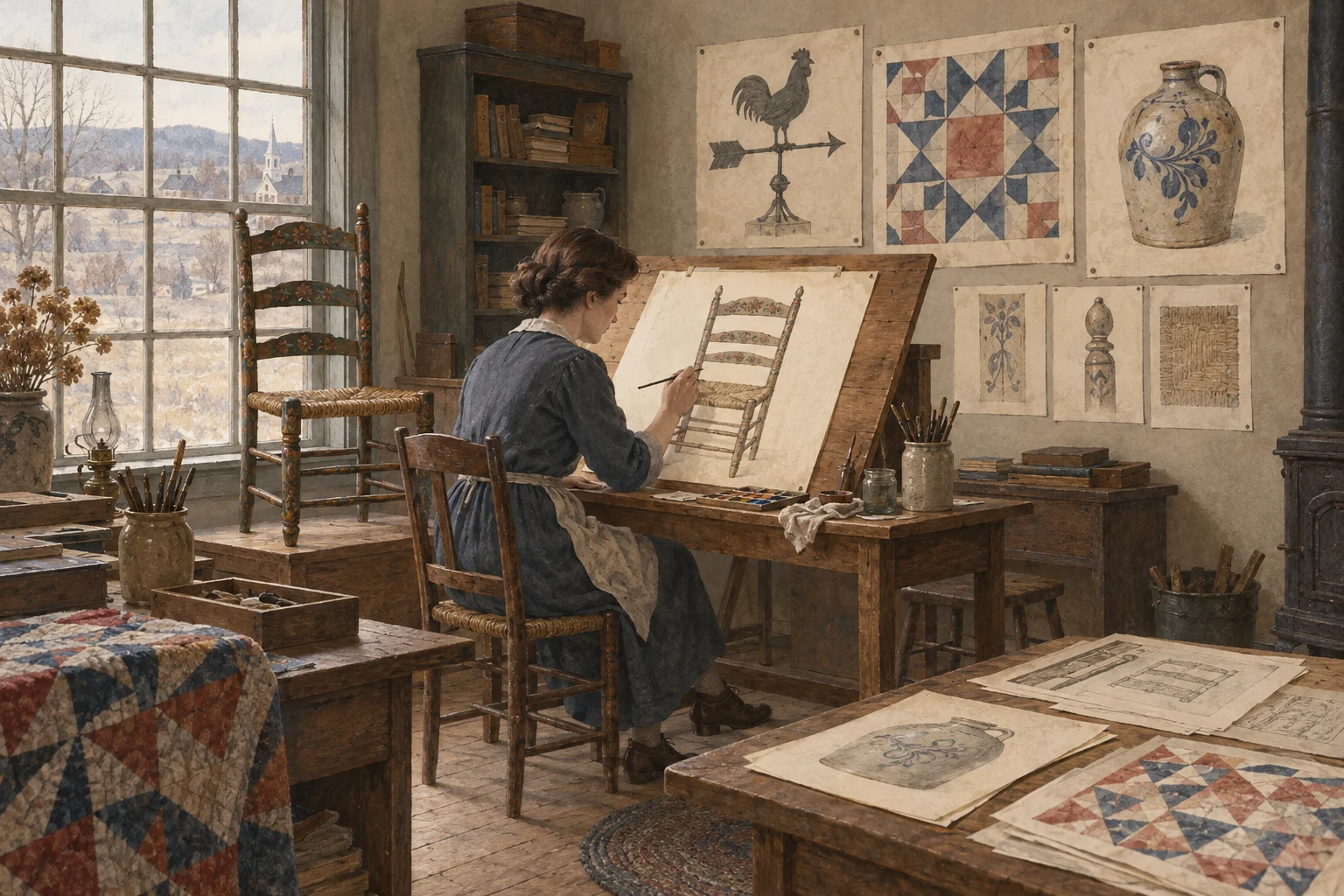
One influential preservation effort was the Index of American Design. During the Great Depression, more than a thousand artists produced over 18,000 detailed watercolor renderings of decorative, industrial, and folk objects. The archive preserved an extraordinary visual record. It also reflected the limits of its time: the project’s idea of national design largely excluded Indigenous, African American, and Asian American objects.
That tension still matters. Collections do not simply preserve history; they shape it through decisions about what to record, how to describe it, and whose knowledge is treated as authoritative. Museums today increasingly question inherited labels, foreground artist agency, and recognize many forms of artistic training and exchange.
Culture, not costume
Why folk art cannot be reduced to an aesthetic.
Folklife includes what people make, know, believe, say, wear, cook, build, perform, and celebrate. Visual traditions sit inside those larger patterns of life. A flower, animal, color, building, material, or repeated mark may be beautiful to an outside viewer while also carrying a local history, family association, religious meaning, or memory of migration.
This is why two works with bold color, flattened perspective, or dense pattern do not automatically belong to the same tradition. Surface resemblance is not cultural equivalence. Context helps us appreciate difference instead of turning many communities into one generic “folk” look.

A way to look closely
Five questions are more useful than one definition.
- 01
Begin with the maker
Who made the work, and how did they learn? Look for a named artist or community before accepting the word “anonymous.”
- 02
Ask what it did
Was it made for a home, ritual, celebration, trade, memory, protest, or pleasure? Purpose can change how form and decoration make sense.
- 03
Notice the visual rhythm
Follow repeated colors, marks, shapes, stitches, windows, leaves, or waves. Pattern often carries both pleasure and meaning.
- 04
Locate the work
What place, materials, histories, or community relationships shaped it? Similar-looking forms can carry very different meanings.
- 05
Leave room for change
A tradition is not a frozen recipe. Artists borrow, adapt, reject, and renew what came before them.
Folk-inspired art today
Inspiration should be named clearly.
Contemporary artists may be influenced by vernacular architecture, hand-built objects, decorative pattern, local landscapes, remembered places, or the direct visual force associated with folk and self-taught art. “Folk-inspired” can be an honest description of those visual choices. It should not imply that a new work is a historic artifact or that it speaks for a culture the artist does not belong to.
Belula’s folk-art room follows that distinction. The works are contemporary Belula interpretations centered on color, place, pattern, and expressive composition. They are presented beside learning material so that browsing begins with curiosity and context rather than a style label alone.
